

Southampton is the right place to begin this series.
Long before it became known for ocean beaches, elegant village streets, and summer escapes, Southampton was the site of a much earlier beginning. Founded in 1640, it holds a singular place in the story of New York: this is where the first English settlement in New York State began.
For a blog series tied to America 250, there is no better opening chapter.
What makes Southampton so compelling is not just its age, though age certainly matters here. It is the way history remains visible in the landscape, the architecture, and the rhythm of the village itself. You can stand near the shoreline where the town’s earliest story began, walk to buildings that predate the United States, and spend the rest of the day moving between centuries-old landmarks, leafy streets, and the kind of small discoveries that make a place feel lived in rather than staged.
Southampton does not just preserve history. It lets you move through it.
And for visitors following the America 250 trail, there is an added layer of fun: a passport book that helps turn the experience into a collectible journey. At each stop, you may be able to earn a stamp or sticker in your book, making each visit part of a larger keepsake of the trail. Some participating sites may have passport books available for sale, and they can also be purchased through Amazon and Barnes & Noble.
Where New York State began
The story of Southampton begins at the water.
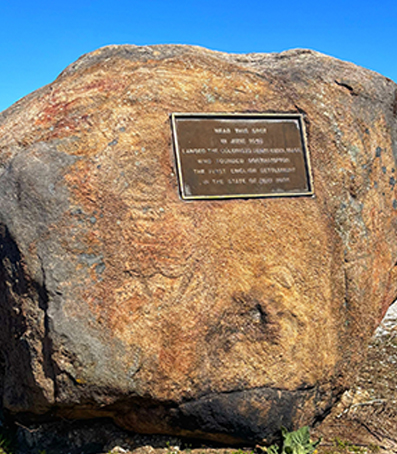
On June 12, 1640, English settlers landed at what is now known as Conscience Point, marking the beginning of Southampton and the first English settlement in New York State. That fact alone makes this village an essential stop for anyone exploring the East End through the lens of America 250.
But Southampton’s appeal goes beyond a founding date.
This is a town where the earliest chapters of New York history unfold across multiple places rather than a single landmark. The shoreline tells one part of the story. A silversmith’s workshop tells another. A centuries-old house, a museum campus, and the village itself add still more layers. Together, they create a place where the past feels close at hand.
For visitors, that means Southampton offers something more meaningful than a quick historic stop. It offers a full experience, one that makes the nation’s anniversary feel grounded in place.
Conscience Point: the beginning of the trail
Every history trail needs a first stop, and Southampton’s has unusual power.
Conscience Point marks the spot where Southampton’s story begins. Standing here, it is easy to understand why this place feels so foundational. There is a quiet simplicity to it. The setting does not need much embellishment. The significance speaks for itself.
What makes Conscience Point especially memorable is the way it connects history to the natural environment. The shoreline remains central to the experience, and the landscape still helps tell the story. It is a place that invites reflection rather than rushing, which makes it the ideal beginning for a Southampton history day.
Start here in the morning if you can. Earlier hours bring a calmer atmosphere, and the light tends to suit the setting. Let this stop set the tone for the rest of the day.
Pelletreau Silver Shop: history that still feels alive
Some historic sites are meaningful because they survived. Others are meaningful because they still feel active, rooted, and alive. Pelletreau Silver Shop belongs in the second category.
Standing on Main Street since 1686, this workshop connects Southampton to an enduring craft tradition. It is also tied to Elias Pelletreau, a Patriot silversmith whose story brings the Revolutionary era into sharper focus. For America 250, that connection matters. This is not abstract history. It is a place where craftsmanship, community, and early American identity meet.
What makes the Silver Shop especially memorable is its sense of continuity. Visitors are not simply looking at the past from behind glass. They are stepping into a place where making has long been part of the story. That gives the site an intimacy that many historic stops never quite achieve.
For travelers who want to go beyond simply observing, the Silver Shop can offer an even more immersive experience through silversmithing and jewelry-making workshops, giving visitors a chance to engage directly with this historic trade in a hands-on way.
It is small in scale, but it leaves a large impression.
Halsey House: a glimpse into early Southampton life
If Conscience Point tells the public story of Southampton’s beginning, Halsey House brings the history down to a human scale.
Built around 1683, Halsey House is one of the oldest English frame houses in New York State. More than that, it offers a window into the lives of Southampton’s founding families and the world they built in the decades after the settlement began.
There is something especially moving about houses of this age. They remind us that history is not only made through declarations and milestones. It is also made through daily life. Through homes, gardens, rooms, routines, and the steady work of building a community.
The herb garden adds another layer to the experience, grounding the house in the textures of early domestic life. For visitors, Halsey House offers a quieter kind of discovery, but often that is the kind that stays with you longest.
Rogers Mansion: where the larger story comes together
Rogers Mansion widens the lens.
While the earlier stops introduce Southampton’s founding and colonial character, Rogers Mansion helps place that history in a broader context. The museum complex gathers multiple buildings and centuries of local life into one setting, making it one of the most rewarding places in the village for anyone who wants to see the fuller picture.
This is where Southampton’s story expands beyond its opening chapter. The campus setting gives visitors a chance to move through different periods of local history and understand how the town evolved over time. For an America 250 feature, that broader context matters. Anniversaries mean more when they are connected to the people, places, and institutions that carried a town forward through generations.
Rogers Mansion helps complete the arc.
Why Southampton works so well as a heritage destination
What sets Southampton apart is that its history does not feel separate from the rest of the visitor experience.
You can spend the morning exploring landmarks tied to the earliest chapters of New York’s history, then walk into the village for lunch, browse along Main Street, pause in Agawam Park, or continue on toward the coast. The town makes it easy to shift from reflection to wandering, from historic discovery to simple enjoyment.
That balance matters.
Most travelers are not looking for a day that feels overly programmed. They want meaning, but they also want ease. Southampton delivers both. Its history is substantial, but the town remains welcoming, walkable, and flexible. You do not have to choose between a heritage outing and a getaway. Here, the two naturally belong together.
Local tips
Best time of day: Start in the morning for the history stops, then leave time later for downtown wandering or a coastal stop. Rain plan: Focus on the indoor and village-based history sites, then add a leisurely lunch or coffee break nearby. Accessibility note: Accessibility varies by site, especially at historic properties, so check directly before you go. Parking/arrival tip: Parking can vary by season and time of day. Earlier arrivals usually make for an easier visit. Make it yours: Keep the day fully history-focused or mix in shopping, dining, and a walk near the water. If you are using the passport book, bring it with you so you can collect stamps or stickers as you go.
If you have 2 hours
Keep it focused.
Start at Conscience Point, then head into the village for one or two historic stops. This works especially well for day-trippers or visitors fitting Southampton into a broader East End itinerary.
If you have a half-day
Do the core history route.
A half-day gives you enough time to experience Southampton’s major heritage sites at a comfortable pace, with room for a coffee, lunch, or a short village stroll in between.
If you have a full-day
Let history shape the day, then follow Southampton wherever it leads.
Spend the morning exploring the town’s historic landmarks, then ease into the rest of the village. Walk Main Street, stop in Agawam Park, linger over lunch, or head toward the beach if the weather cooperates. This is the version of Southampton that feels most complete: a place where early American history and East End leisure meet naturally.
Seasonal sidebar: what changes through the year
Spring: One of the best times to explore Southampton’s historic side, with calmer streets and a fresher, quieter feel. Summer: Ideal for pairing history with beach time, especially if you start early. Fall: Excellent for walking, with cooler air and a slightly slower village pace. Winter: A more intimate side of Southampton, though hours may vary, so check ahead.
Why Southampton opens this series so well
Every town has its own relationship to America 250. Southampton’s feels foundational.
This is not just a place with old buildings or colonial references. This is where New York State began. That fact gives the village a natural gravity, but Southampton’s real strength is that it makes history feel personal, physical, and easy to explore.
You can begin at the shoreline, continue through streets and buildings shaped by centuries of change, and come away with something more than a list of facts. You come away with a stronger sense of place.
That is why Southampton belongs at the beginning of this series.
This is the first stop in our America 250 town series across the East End.
Sign up for the East End Getaway newsletter for more historic highlights, local guides, seasonal inspiration, and the next town in the series.